About Me
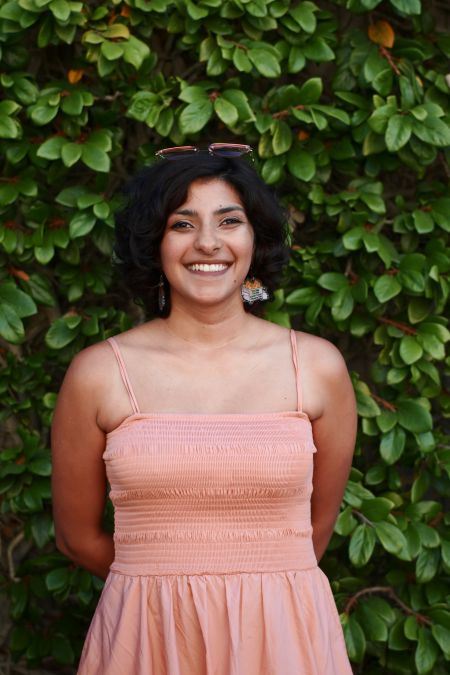
I’m a Ph.D. candidate in Experimental Psychology at the University of California, San Diego. I work with Dr. David Barner at the Language and Development Lab.
Before this, I was at the University of Western Ontario, where I completed a B.A. (Hons.) in Psychology and History, along with the Scholar’s Electives Program.
My Research
How do humans make sense of the world? All animals experience physical reality. We readily represent space, estimate quantities, and discriminate durations. But unlike other animals, humans rely on abstract symbols to organize this noisy perceptual experience. We create maps and models to navigate space, design clocks and calendars to keep time, and construct counting systems to reason about numbers. What’s more, we reason about entities, places, and times that we never directly experience. We imagine places we’ve never been, budget and trade amounts we’ve never seen, ruminate over counterfactual pasts, and make plans for multiple possible futures. Motivated to build explanations of our experience, we construct scientific theories, build complex technologies, create art, and write fiction, not just to describe how the world is, but imagine how it could be. I study the foundations of such abstract thought.
My research program is centered around three broad questions:
(1) what role does early sensory-perceptual experience play in the construction of abstract concepts?
(2) how does language facilitate abstract thought?
(3) what logical processes and sensorimotor procedures are involved in learning and abstraction?
I address these questions through empirical case studies on the origins and development of numerical cognition, temporal reasoning, spatial thinking, and modal reasoning in children and adults. I conduct both in-lab and field studies across a range of developmental, linguistic, and cultural contexts.